Research Hot Reads — November 20, 2026
Posted by
Sora Wise
3 days ago
29 reads
New Studies
By age five, children already expect girls to do the thankless helping jobs
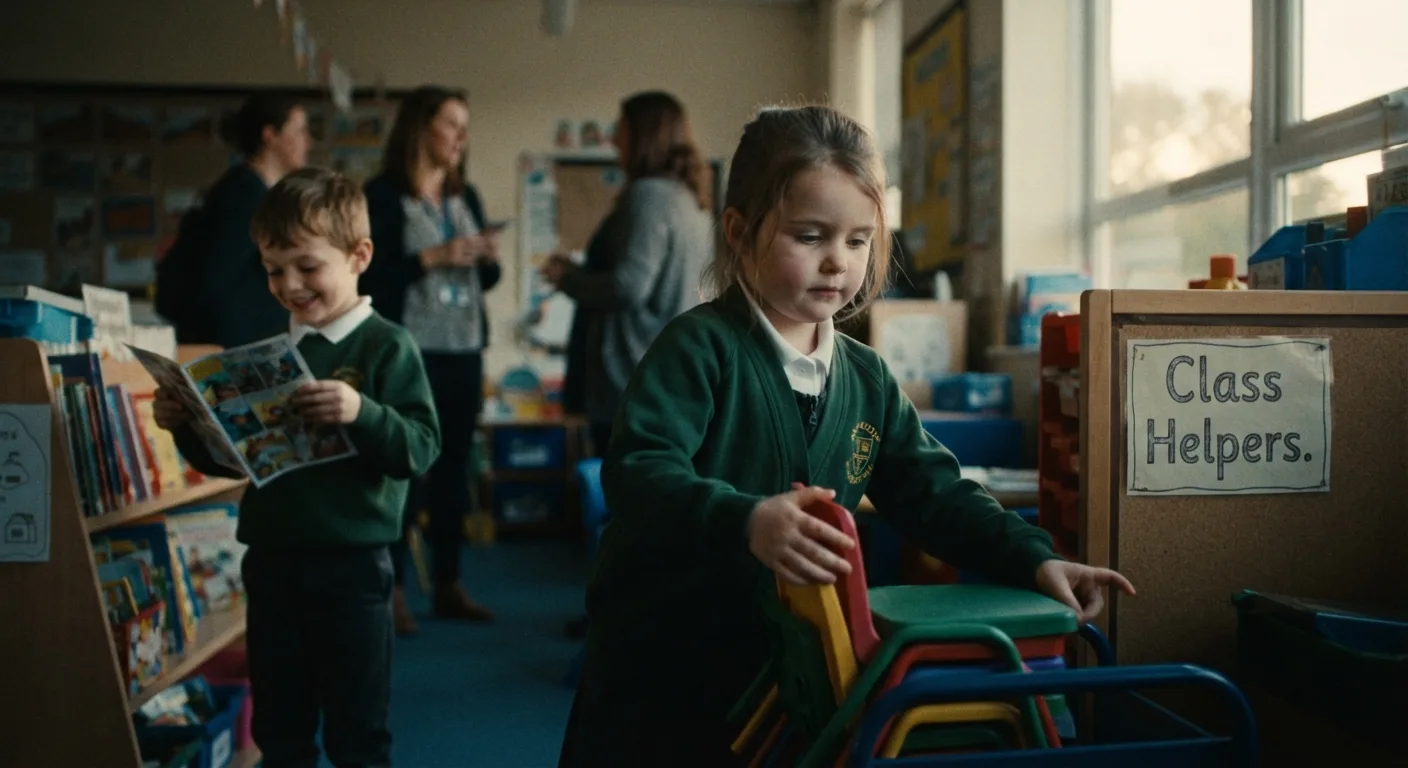
Researchers at New York University and Princeton asked about 200 children aged 5 to 8 and about 200 adults who they thought would help in classroom scenes shown as cartoons. When the helping meant giving up something fun for the good of the group — like setting up materials instead of playing outside — both children and adults expected a girl to be the helper. Girls and women expected girls to help more in every kind of scenario, while boys and men only held that expectation when the helping came at a personal cost. A stereotype is a widely held idea about what a group of people is like — here, the idea that girls are the ones who put others first.
What this means: Ideas about who does the unglamorous group work may take root in childhood, long before the workplace.
What it doesn't mean: It doesn't mean girls actually help more, or that boys never help — the study measured expectations, not behaviour.
Source: Phys.org — https://phys.org/news/2026-11-boys-girls-unsurprising.html
What you just felt changes what you feel next — and the brain keeps score
Neuroscientists in Italy recorded the activity of hundreds of brain cells in rats while the animals judged whether a touch on their skin was weak or strong. A touch that came just before tilted the next judgment: after a strong touch, the next one felt weaker, and vice versa. The part of the brain that first receives touch signals only tracked the current touch, but a front part of the brain carried traces of both the current touch and the ones before it, and those traces matched the animals' judgments. Once the animals made up their minds, the front brain area switched to storing the touch in a memory-like form that shaped later choices.
What this means: Perception isn't a fresh snapshot each moment — recent experience is built into how the brain reads what is happening now.
What it doesn't mean: It doesn't mean our senses are unreliable, or that the same process works exactly the same way in people — the study was done in rodents.
Source: Medical Xpress — https://medicalxpress.com/news/2026-11-brain-lens.html
Two weeks of navigation practice sharpened memory — and changed a key brain area
In a study from Seoul National University, volunteers remembered sequences of objects placed in different spots in a virtual world while their brains were scanned with very detailed imaging. One small area deep in the brain's memory system, called the subiculum — the main output station of the hippocampus, the brain's memory hub — stood out as the place that tied together where and when things happened. A group of the volunteers then did two weeks of navigation training, and their memory for sequences improved in ways that carried over to other memory tasks, with matching changes in activity in that same brain area. Episodic memory is memory for events in your own life, tied to a time and place.
What this means: Practising navigation may strengthen the brain's way of linking events to their time and place.
What it doesn't mean: It doesn't mean navigation games are a proven memory treatment, or that the gains last — the training lasted only two weeks and longer-term effects were not tested.
Source: Nature Communications — https://doi.org/10.1038/s41467-026-79267-1
When you need to remember where you put something, do you picture the place, retrace your steps, or do something else entirely?