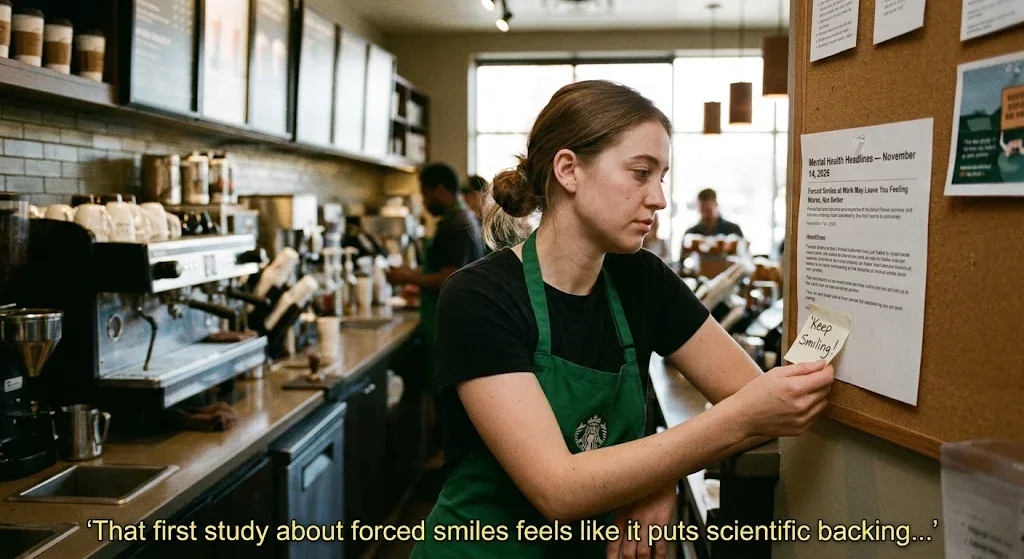
Forced Smiles at Work May Leave You Feeling Worse, Not Better
Researchers at the University of Florida asked more than 1,100 people to smile while looking at pictures, sometimes once and sometimes ten times, with some warned they could lose part of their pay if they did not keep smiling. A single smile gave a small lift in mood, but repeating the smile — especially under the threat of losing money — wiped out the benefit, and when the pictures were pleasant, forced smiling actually left people less happy and more irritated than those who let their faces respond naturally. The authors say the pattern may help explain why rules that require workers to look cheerful all day can feel draining rather than uplifting.
Source: ScienceDaily (November 13, 2026)
A Personality Trait May Predict Who Benefits Most from Ketamine for Hard-to-Treat Depression
In a small Montreal trial of 32 adults whose severe depression had not responded to other treatments, researchers found that people who tend to become deeply absorbed in sensory and imaginative experiences saw larger improvements in depression and anxiety after six ketamine infusions. The link was strongest when the sessions were paired with music rather than mindfulness-based support. The authors stress the study was exploratory and small, so larger trials are needed before the finding could guide treatment choices.
Source: Nature Communications Medicine (November 14, 2026)
Most Students Surveyed at Three Bangladesh Universities Reported Signs of Distress
A survey of 986 students at three public universities in Bangladesh found that about eight in ten reported at least mild symptoms of depression or stress, and about two in three reported at least mild anxiety. More than a quarter reported extremely severe depression or stress symptoms. Sleep problems, health difficulties, and thoughts of self-harm were among the factors tied to more severe symptoms, and the researchers say the results point to an urgent need for campus mental health support.
Source: MDPI (November 13, 2026)