Abstract
Background. Anxiety proneness can explain a longstanding tendency toward worry and threat sensitivity, but it neither establishes a diagnosis nor makes distress untreatable. Confusion between disposition and disorder can lead to unnecessary medicalization or delayed care.
Objective. To distinguish anxiety-related constructs, evaluate evidence connecting vulnerability with clinical outcomes, and develop practical guidance that separates treatment, symptom reduction, delayed onset, and sustained prevention.
Approach. Targeted searches of PubMed-indexed records, publisher and institutional sources, and clinical guidance informed a critical narrative synthesis. Selection was purposive; no systematic screening, original risk-of-bias assessment, or pooled reanalysis was undertaken.
Findings. The related constructs overlap but are not interchangeable, and group-level associations do not provide individual risk estimates. Treatment evidence supports cognitive behavioral therapy for established disorders. Adult research on traits and proposed risk processes includes a student symptom trial and a small perinatal diagnostic-outcome trial, with different eligibility and endpoints. In a pediatric family trial, early onset benefits were not accompanied by a statistically significant cumulative-incidence difference at six years. Target change, symptom benefit, diagnostic prevention during a defined interval, and sustained benefit require separate interpretation.
Clinical implications. Assessment should integrate symptom pattern, clinically significant distress or interference, duration, exclusions, and context. Functional goals, shared treatment decisions, and reassessment can guide care without making temperament itself a treatment indication. Prevention claims require a defined population, baseline status, comparator, outcome, and time horizon.
Keywords: trait anxiety; neuroticism; behavioral inhibition; anxiety sensitivity; intolerance of uncertainty; prevention; cognitive behavioral therapy
Key points
Anxiety proneness provides context; clinical need depends on current symptoms, distress, interference, and circumstances.
A high trait score does not establish a diagnosis, and a low screening score does not rule out need.
Target change, symptom improvement, prevention during a defined interval, and sustained benefit are different findings.
Care should expand meaningful participation while preserving necessary supports and access to assessment.
Introduction
A person who has always worried may interpret increasing anxiety as simply being “the way I am.” That explanation can reduce shame, yet it can also hide a treatable disorder. Anxiety-prone disposition and an anxiety disorder can coexist; a disorder can also develop without a longstanding anxious disposition. The practical task is to identify current need without converting ordinary variation into pathology. [1,2]
“High-anxiety personality” is an informal phrase rather than a recognized diagnosis. It can refer to anxious emotional reactivity, broader negative emotionality, discomfort with novelty, fear of anxiety sensations, or difficulty tolerating uncertainty. These are related constructs with different measures and clinical implications. Treating them as interchangeable obscures what a study actually predicts and what an intervention actually changes. [2,3,4,5,6]
This review advances a practical distinction between vulnerability, clinical need, and intervention outcome. Vulnerability describes an elevated probability at the group level. Clinical need concerns a person's present distress, functioning, symptom pattern, and circumstances. Intervention outcomes include changes in symptoms, participation, timing of onset, or diagnostic incidence. Evidence in one category cannot automatically establish another. A reduction in fear of bodily sensations, for example, does not by itself demonstrate prevention of a future disorder.
Four interpretive boundaries organize the synthesis: a risk marker versus an intervention indication; change in a proposed target versus clinical benefit; results in a study population versus applicability to another person; and early benefit versus sustained benefit. These distinctions are an author-developed synthesis, not a validated risk or triage model.
The review therefore asks how anxiety proneness should be distinguished from clinical anxiety, which potentially modifiable processes merit attention, and what guidance the treatment and prevention evidence justify. It is intended as a clinically useful synthesis for practitioners and informed readers, with an illustrative application guide in Appendix A.
Scope and approach
Targeted web searches conducted on October 16, 2026 located PubMed-indexed literature, publisher and institutional research records, and guidance from NICE, NIMH, and the US Preventive Services Task Force. Concepts included trait anxiety and measurement specificity; neuroticism and prospective risk or change; behavioral inhibition; anxiety sensitivity and intervention; intolerance of uncertainty and treatment; screening; psychological prevention; family interventions and long-term follow-up; adult trait-focused and perinatal trials; digital care; exposure; sleep; exercise; and caffeine. Reference lists supplied additional leads. Selected primary records were rechecked while preparing this revision.
Selection favored construct validation, prospective syntheses, randomized trials, systematic reviews, and directly relevant clinical guidance. It was purposive and English-language, rather than exhaustive. Access ranged from full text to abstracts and bibliographic records; claims were restricted to material available for inspection. No registered protocol, comprehensive database export, independent screening or extraction, study-level risk-of-bias assessment, or original certainty grading was undertaken. Numerical estimates retain the source population, comparison, and outcome. Reviews and their included trials were not treated as independent replications. Studies qualifying an apparent evidence gap were deliberately considered. The search cannot establish that an unlocated trial does not exist; no fresh full-text audit of every cited source was completed.
What the related constructs describe
Table 1 separates constructs that are often grouped under anxiety proneness. Trait anxiety concerns relatively enduring anxious reactivity, whereas state anxiety concerns the current experience. Neuroticism covers a wider range of negative emotions. Behavioral inhibition principally describes early responses to novelty. Anxiety sensitivity concerns beliefs about anxiety sensations, and intolerance of uncertainty concerns responses to unresolved possibilities. [2,3,4,5,6]
Table 1. Constructs relevant to anxiety proneness
Construct | Meaning and evidence | Interpretive boundary |
Trait anxiety | Relatively enduring anxious reactivity; STAI-T overlaps substantially with depressive symptoms. [2] | A score does not distinguish disposition from current disorder. |
Neuroticism | Broader negative emotionality. Prospective associations remain after adjustment, but are substantially attenuated. [3] | Prediction does not establish an independent cause or a fixed identity. |
Behavioral inhibition | Restrained responses to unfamiliarity, especially in childhood; associated with later social anxiety. [4] | A pooled odds ratio is neither an individual probability nor inevitability. |
Anxiety sensitivity | Fear of the consequences of anxiety sensations; associated particularly with panic-related difficulties. [5,7] | Often assessed concurrently with symptoms; causal direction is uncertain. |
Intolerance of uncertainty | Negative responses to unresolved possibilities; associated across several emotional disorders. [6,8] | Not specific to one diagnosis; causal and treatment evidence require separate interpretation. |
The distinction between disposition and process is useful but not absolute. Anxiety sensitivity and intolerance of uncertainty can themselves be enduring individual differences; temperament can change. None describes a person's identity or establishes that treatment must change their personality. A review of 207 intervention studies found changes in personality measures, particularly emotional stability, across clinical and other interventions. Mixed designs and symptom overlap limit causal interpretation, but the findings argue against treating personality scores as immutable. [9]
Measurement requires particular care. The STAI trait scale was similarly correlated with anxiety and depressive symptom severity in a meta-analysis of 388 studies involving 31,021 participants. This supports concern about its specificity, not the conclusion that all anxiety-related constructs are indistinguishable. Researchers should name the measure used; clinicians should interpret scores alongside history and current presentation. [2]
When disposition becomes a question of care
Clinical significance and diagnostic pattern
An anxiety disorder involves more than a high questionnaire score or a tendency to worry. Diagnosis requires the relevant symptom pattern, duration and exclusions, together with clinically significant distress or impairment. Keeping a job or achieving high grades does not rule out a disorder: apparent functioning may conceal severe distress, lost sleep, extensive preparation, or avoidance elsewhere. Conversely, anxiety in response to ongoing danger needs contextual assessment rather than automatic attribution to temperament. [1]
Generalized anxiety disorder (GAD) illustrates the distinction. In adults, excessive worry across several domains is difficult to control and occurs more days than not for at least six months, with at least three associated symptoms among restlessness, fatigue, concentration difficulty, irritability, muscle tension, and sleep disturbance. Clinical evaluation also considers significance, substances, medical conditions, and alternative explanations. The six-month criterion is specific to GAD and is not a waiting period before seeking help. [10]
Assessment also follows the focus of anxiety. Fear of scrutiny suggests questions about social anxiety; recurrent unexpected panic and subsequent persistent concern or behavior change suggest questions about panic disorder. Intrusive thoughts with rituals and trauma-related symptoms warrant assessment for obsessive-compulsive disorder and PTSD respectively, which have separate diagnostic groupings. These examples guide inquiry rather than provide self-diagnostic rules. [1]
Screening and individual judgment
The GAD-7 is useful for symptom assessment and screening, but it cannot establish a diagnosis. [11] A 2025 Cochrane review of 48 studies involving 19,228 participants found substantial variation across populations and settings. At a threshold of 10 or the closest available threshold, pooled sensitivity for GAD was 0.64 and specificity 0.91; sensitivity for any anxiety disorder was 0.48. These are heterogeneous averages, not fixed performance characteristics for every setting. A low score should not override persistent distress, avoidance, or a convincing clinical history. [12]
The USPSTF recommends screening asymptomatic adults aged 19–64, including pregnant and postpartum people, with further assessment and care for positive screens. Evidence was insufficient to determine the balance of routine screening benefits and harms at age 65 or older. This uncertainty concerns screening people without recognized symptoms; symptomatic older adults still warrant evaluation. [13]
A useful assessment asks what anxiety costs in time, sleep, relationships, attendance, and opportunities, as well as how the person remains functional. It also considers depression, substances, medications, physical symptoms, and recent changes. New or atypical bodily symptoms should receive appropriate medical assessment. Neither a trait label nor a reassuring score should close that inquiry. [14]
A framework for assessment rather than a causal pathway
Figure 1 organizes information relevant to clinical formulation. It does not depict a necessary sequence from temperament to disorder. Disposition, symptoms, beliefs, behavior, and environment can influence one another over time; their importance differs across people. Genetic and environmental influences, current stressors, and measurement overlap make a single progression model inadequate. [1,3]
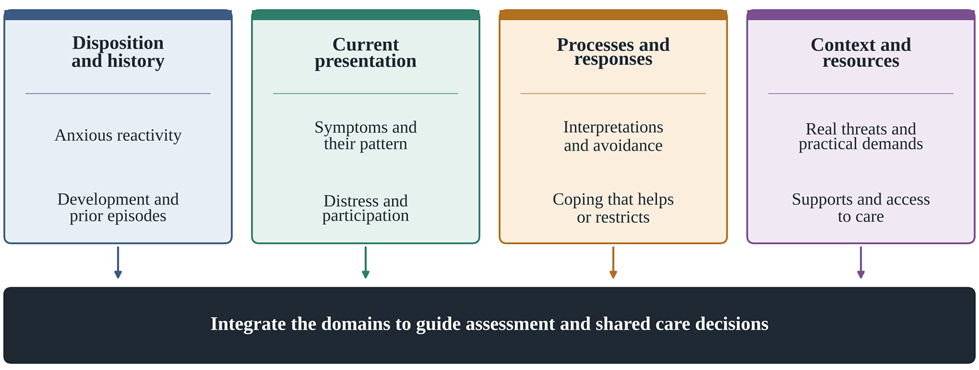
Figure 1. Domains to integrate when assessing anxiety proneness. The domains are complementary sources of information, not stages, diagnostic criteria, or a fitted risk model. The figure is an author-developed clinical synthesis informed by the literature cited in this section.
Clinically, formulation means identifying what appears to trigger and sustain this person's difficulty and what enables participation. It can guide an intervention even when the cause of the original vulnerability is uncertain. Evidence that changing a process improves an outcome is stronger than a cross-sectional correlation, but it still does not establish that the process caused the disorder's first onset.
Potentially modifiable processes
Anxiety sensitivity
Anxiety sensitivity can amplify distress when sensations are interpreted catastrophically. “My heart is racing” and “a racing heart means I am about to die” invite different questions. Meta-analyses link anxiety sensitivity with internalizing psychopathology, especially panic-related problems, but concurrent associations cannot establish causal direction. [5,7]
Intervention evidence adds an important qualification. A meta-analysis of 28 studies with 1,998 participants in at-risk samples found that brief anxiety-sensitivity interventions reduced the target relative to controls at post-intervention (d = 0.54, 95% CI 0.40 to 0.68). The pooled longer-term target effect was not statistically significant, and associated clinical or behavioral effects were smaller. A nonsignificant estimate does not establish the absence of an effect. This supports malleability and further preventive research, while leaving the distinct question of sustained diagnostic prevention unresolved. [15]
For people who fear familiar bodily sensations, appropriately assessed interoceptive exposure can form part of panic-focused CBT. The purpose is to test feared meanings and increase willingness to experience sensations. It is not a general instruction to induce dizziness, hyperventilation, or chest symptoms independently. Medical precautions remain relevant, and unexplained symptoms require assessment before they become exposure targets. [16,17]
Intolerance of uncertainty
Intolerance of uncertainty is associated with worry and symptoms across GAD, depression, and obsessive-compulsive disorder. That breadth makes it relevant to formulation but limits diagnostic specificity. A systematic review of experimental and temporal-precedence studies found a smaller and less settled causal literature than the correlational literature. [6,8]
A randomized trial tested uncertainty-focused behavioral experiments in adults with GAD. [18] A subsequent meta-analysis of 26 studies involving 1,199 adults with GAD found improvement in intolerance of uncertainty during psychological treatment. Treatments explicitly targeting uncertainty showed greater short-term improvement in uncertainty and worry than general CBT in subgroup analyses, but that comparative advantage was not maintained at follow-up. This does not mean that all gains in uncertainty or worry disappeared. This supports a treatment option without proving that change in uncertainty is the sole active ingredient or that it prevents first onset. [19]
Avoidance and reassurance
Avoidance can provide immediate relief while reducing opportunities to learn that a feared situation is manageable. Exposure-based treatment addresses this through planned contact with feared but sufficiently safe situations. Learning models emphasize testing expectations and building new responses; success need not require anxiety to disappear within an exercise. [16]
The function of a behavior matters more than its appearance. Checking an important calculation once may be responsible; repeatedly checking a routine message to eliminate all doubt may restrict functioning. Assistance that enables a disabled person to participate should not automatically be removed as a safety behavior. A useful question is whether a response supports the person's goals or progressively makes ordinary activity dependent on certainty and escape.
Attention bias is another proposed mechanism, but a plausible explanation is not enough to recommend a generic training product. A network meta-analysis found uneven results across cognitive bias modification approaches. These findings do not validate attention-training apps as established methods for preventing anxiety disorders. [20]
What prevention evidence can establish
Define the population and outcome first
Universal prevention offers an intervention irrespective of individual risk. Selective prevention targets elevated-risk groups; indicated prevention targets early symptoms below the diagnostic threshold for the condition of interest. Treatment addresses an existing disorder. A study must establish baseline diagnostic status before a reduction in diagnoses can be interpreted as prevention of first onset.
Symptoms, functioning, time to first onset, and cumulative diagnostic incidence answer different questions. Preventing an onset during a specified interval is a legitimate prevention outcome; lifelong protection is not required. Later convergence qualifies durability without erasing an earlier randomized-group benefit. Table 2 summarizes selected studies rather than ranking programs.
Table 2. Selected prevention findings and their limits
Study and population | Outcome and finding | What can be concluded |
Moreno-Peral et al., 2017 [21]
Varied preventive populations | Small average benefit across psychological or educational interventions. | Pooled benefit does not identify a universally effective program. |
Bermudez et al., 2025 [22]
17 universal CBT trials; N = 10,809 | Anxiety symptoms: SMD −0.03 (95% CI −0.18 to 0.13). | No clear average symptom benefit in the evaluated programs. |
Lawrence et al., 2017 [23]
16 trials in at-risk young people | Only two trials reported diagnostic outcomes; baseline disorders were often not ruled out. | Some findings may represent treatment or early intervention. |
Ginsburg et al., 2015 and 2021 [24,25]
136 families; disorder-free children at entry | One-year onset about 5% versus 31%; no statistically significant cumulative-incidence difference detected at six years. | Early benefit and sustained prevention must be distinguished. |
Rapee et al., 2005; Kennedy et al., 2009 [26,27]
Inhibited preschool samples | Reduced diagnoses; Kennedy participants all had disorder at baseline. | Risk selection alone does not make a study first-onset prevention. |
Musiat et al., 2014 [28]
1,047 students randomized | Short-term anxiety-symptom improvement in the high-risk subgroup; substantial attrition. | Trait-focused adult research exists; diagnostic prevention was not demonstrated. |
Furtado et al., 2026 [29]
37 randomized during pregnancy; 35 analyzed | Fewer postpartum diagnostic/provisional cases in a proof-of-concept trial. | Population-specific signal requiring larger replication and full-method appraisal. |
García-Huércano et al., 2025 [30]
15 digital studies; N = 6,093 | Symptom SMD −0.32 (95% CI −0.44 to −0.20) after one outlier excluded; very low certainty. | Program-specific testing remains essential. |
Dunn et al., 2024 [31]
1,811 highly anxious parents randomized | Parent-rated child symptoms: d = −0.16 (95% CI −0.23 to −0.08) at primary follow-up. | Supports symptom benefit, not demonstrated diagnostic prevention. |
SMD, standardized mean difference; CI, confidence interval. The table is a purposive selection, not an exhaustive comparison or ranking. Sample sizes in review rows refer to the review; not every participant necessarily contributed to each pooled outcome.
Short-term diagnostic benefits and later convergence
A particularly informative trial of Coping and Promoting Strength (CAPS) enrolled 136 families with an anxious parent and a child aged 6–13 who did not have an anxiety disorder. Over one year, approximately 5% of intervention children and 31% of controls developed a disorder. The difference of about 26 percentage points corresponds to an approximate number needed to treat of four under those trial conditions, calculated from rounded percentages. [24]
At a six-year assessment, 113 families, 83% of the original sample, participated. The follow-up did not detect a statistically significant group difference in cumulative anxiety-disorder incidence, although time-to-onset analyses favored the intervention and suggested that benefits were concentrated in the first year. This pattern is consistent with earlier benefit or delayed onset rather than demonstrated sustained prevention for the cohort. A nonsignificant comparison does not establish equivalence. The naturalistic follow-up and interim treatment complicate interpretation; the results do not establish an optimal booster schedule. [25]
Preschool findings require similar attention to baseline status. Rapee and colleagues reported fewer diagnoses following parent intervention without a significant change in inhibition. In Kennedy and colleagues' trial, all participating children already met anxiety-disorder criteria. The latter study supports treatment in a selected high-risk sample rather than prevention of first onset. [26,27]
Adult evidence requires a narrower question
Adult trait-focused intervention research should not be described as absent. Musiat and colleagues randomized 1,047 university students to trait-focused or control online programs. In the high-risk subgroup, anxiety symptoms improved at 12 weeks, but only 401 participants completed that assessment. The trial used several personality indicators, had no exclusion criteria, and assessed symptoms rather than diagnostic incidence. It therefore supports a short-term symptom finding in a selected student population, not sustained first-onset prevention based solely on trait anxiety. [28]
A published proof-of-concept trial of CBT targeting intolerance of uncertainty during pregnancy randomized 37 participants; 35 were included in analyses. The abstract reports no diagnostic or provisional postpartum anxiety-related cases in the intervention group versus 31.6% with usual care. This is relevant adult prevention evidence, although the small single-site sample, special population, and combined diagnostic/provisional endpoint require caution. Full methods and follow-up details were not accessible for this review. It cannot establish general prevention for anxious temperament or justify interpreting zero observed cases as zero future risk. [29]
These examples change the question from whether adult prevention research exists to whether a specific program reduces new disorders over a specified period in a defined, initially disorder-free population. Evidence reviewed here does not establish routine preventive treatment for asymptomatic adults selected solely for high trait anxiety.
Population delivery and digital access
A broad 2017 synthesis found small preventive intervention benefits across varied populations. [21] A 2025 meta-analysis of universal CBT programs reported an anxiety-symptom SMD of −0.03 (95% CI −0.18 to 0.13), compatible with no average effect. Its findings constrain claims about the programs evaluated; they do not prove that every universal strategy fails or establish the superiority of targeted programs through direct comparison. [22]
A 2025 digital-prevention review reported a small pooled symptom benefit after exclusion of one outlier (SMD −0.32, 95% CI −0.44 to −0.20), with high heterogeneity and very low certainty. Differences in eligibility, delivery, comparison groups, and outcomes prevent a simple numerical ranking against the universal-program review. [30]
A large UK trial offers a useful program-specific example. An unguided online intervention for highly anxious parents randomized 1,811 participants and produced a small reduction in parent-rated child anxiety at the primary follow-up (d = −0.16, 95% CI −0.23 to −0.08). Parent reporting and differential follow-up participation matter, and the outcome was symptom severity rather than incident clinician-confirmed disorder. The article has a published correction to a parental-anxiety confidence interval; that correction does not change the child-symptom estimate discussed here. [31,32]
Collectively, these studies support evaluating particular programs for particular populations and endpoints. They do not establish a general preventive prescription for otherwise healthy adults selected only for high trait anxiety. Symptom benefit, access, burden, and durability all matter when deciding whether a program is useful.
Four boundaries between evidence and clinical action
A predictor is not yet an intervention indication
Neuroticism and behavioral inhibition are associated with later difficulties, but prediction alone cannot show that intervention based on either score improves outcomes. Existing symptoms, psychiatric history, social adversity, and measurement overlap can contribute to the observed association. Assessment should identify a current problem or a population-specific preventive opportunity before translating vulnerability into treatment. [3,4]
Target change is not the same as clinical benefit
Anxiety sensitivity and uncertainty can change during intervention, but a program’s effect on a target and its effect on new diagnoses require separate evaluation. A treatment package may act through several processes. Randomizing a package does not isolate the causal contribution of each component, and correlations between changes in two measures do not establish mediation. Conversely, an intervention need not have its mechanism fully explained before a convincing clinical benefit can justify use.
Population transfer requires more than a shared construct
An inhibited preschool child, a high-risk university student, and a pregnant adult with elevated uncertainty are not interchangeable samples. Shared terminology does not remove differences in development, baseline symptoms, setting, family involvement, or opportunity for prevention. The SPACE trial, for example, included children aged 7–14 and a sample reported as 83% White. That does not establish ineffectiveness elsewhere, but it limits assumptions about cultural and service-level generalizability. Adaptation should preserve the treatment rationale while testing acceptability and outcomes in the intended setting. [33]
A time horizon is part of the result
The one- and six-year CAPS findings illustrate why duration belongs in the claim. The later nonsignificant cumulative-incidence comparison does not prove group equivalence or show that no individual benefited. Equally, a first-year benefit does not establish durable protection. Clinical monitoring and maintenance research are reasonable implications; a particular booster schedule is not an established consequence of these results. [24,25]
These distinctions support different decisions. Current distress can justify care even when prediction is weak. A preventive program can be discussed when its population, baseline eligibility, and outcomes match the intended recipient. An untested transfer should be identified as a research question rather than presented as an established indication.
Translating evidence into care
Match the next step to current need
When anxiety is manageable and participation is intact, education, ordinary health routines, and modest practice with unnecessarily avoided activities may be reasonable. Persistent distress, growing avoidance, recurrent panic, disrupted sleep, or increasing reliance on substances warrants assessment. People can seek help before a full disorder develops; self-management should not become a prerequisite for care.
For established disorders, CBT has evidence from randomized placebo-controlled trials. [17] A network meta-analysis of 65 trials in adults with GAD supports CBT, including follow-up benefits relative to usual care. Choice should reflect the presenting problem, preference, therapist competence, previous response, and access. [34] A transdiagnostic approach such as the Unified Protocol can suit overlapping emotional difficulties, supported by a randomized comparison with disorder-specific protocols. This expands treatment options without removing the need for diagnostic formulation. [35]
Medication is also an evidence-based option for established anxiety disorders. NICE recommends discussing psychological treatment and medication for GAD according to severity, prior response, and preference; when drug treatment is chosen, an SSRI is an initial option. Benefits, adverse effects, interactions, withdrawal, and follow-up require shared discussion. Medication is not indicated solely by a personality score. [14]
Make behavioral practice specific
An illustrative experiment begins with a meaningful activity and a testable prediction. A person who repeatedly edits routine messages might predict that a minor imperfection will lead to serious criticism. They could review one low-stakes message once, send it, and observe the response. The learning question includes both whether the feared event occurred and how manageable the actual outcome was. Important safeguards for confidential material, financial decisions, and genuine hazards remain in place. [16,18]
Practice should be manageable, collaborative, and repeated when useful. Completion while anxious may represent progress. Persistent overwhelm, dissociation, or increased avoidance calls for reassessment and support rather than simply intensifying the exercise. Appendix A offers a practical recording structure, not a validated prevention protocol.
Support health without making routines another source of fear
Trials that improved sleep also improved mental health outcomes, including anxiety. The evidence concerns interventions that successfully changed sleep, so a sleep-hygiene checklist alone should not be described as preventive treatment. Consistent sleep timing and assessment of persistent insomnia are reasonable starting points. [36]
Exercise may reduce anxiety symptoms, although evidence varies by population and study design. Sustainable movement suited to health and preference can support care. [37] Caffeine-challenge studies in panic disorder support concern about sensitivity to high doses; they do not establish the effect of every everyday serving. A gradual reduction can be considered when caffeine appears to worsen symptoms. [38]
Using alcohol, cannabis, or sedatives increasingly to manage ordinary situations or sleep deserves clinical discussion. Prescribed medication should be changed with the prescriber. These conversations should identify practical barriers and contributors rather than assign blame. [14]
Choose supported options deliberately
Therapist-supported internet CBT has treatment evidence and can improve access. A suitable program should have research on the intervention itself, a clear treatment rationale, privacy information, and a route to further support. Evidence for one program cannot validate every commercial anxiety app. [39]
Structured mindfulness can be another option. An eight-week mindfulness-based stress reduction program was noninferior to escitalopram in a randomized trial involving adults with anxiety disorders. That result does not establish equivalence between a brief meditation app and medication, or prove prevention in anxious temperament. Preference, time demands, and the person's response to inward attention should inform selection. [40]
Guidance for parents and caregivers
An inhibited child may need time and help to enter unfamiliar situations. A supportive response acknowledges fear, communicates confidence in coping, and identifies a manageable next step. Watching briefly, joining with a trusted adult, and then trying part of an activity may support participation. The aim is to expand the child's options without demanding extroversion or dismissing distress.
Family responses can be treatment targets. In a trial involving 124 children aged 7–14 with anxiety disorders, the parent-based SPACE program was noninferior to child CBT on anxiety outcomes. This supports a treatment option addressing accommodation, not a guarantee that correct parenting prevents all anxiety. [33]
Before reducing support, ask whether the child faces bullying, discrimination, sensory overload, a learning difficulty, disability-related needs, or actual danger. Necessary assistance should remain available. Persistent school avoidance, restricted friendships, disrupted sleep, or family routines increasingly organized around fear warrants assessment. Parents may also need care for their own anxiety, but a parent's diagnosis does not make them responsible for every symptom in a child.
Synthesis for clinical interpretation
Table 3 links each evidence question to the decision it can reasonably inform. It is a narrative synthesis, not a formal certainty rating or validated decision instrument.
Table 3. Evidence questions and implications for care
Question | Evidence reviewed | Interpretation for care |
Can established anxiety disorders be treated effectively? | CBT trials and GAD network meta-analysis; psychological and medication options in guidance. [14,17,34] | Offer evidence-based care for an established problem, considering preference, access, previous response, and treatment burden. Treatment efficacy does not establish primary prevention. |
Can proposed intervention targets change? | Anxiety sensitivity: post-intervention d = 0.54 (95% CI 0.40 to 0.68); longer-term target estimate nonsignificant. IU-focused treatment had a short-term comparative advantage over general CBT that was not maintained at follow-up. [15,19] | Target change and clinical benefit require separate evaluation. Loss of a comparative advantage does not mean all treatment gains disappeared. |
Do prevention programs improve symptoms? | Universal CBT: SMD −0.03 (95% CI −0.18 to 0.13); digital interventions: SMD −0.32 (95% CI −0.44 to −0.20), very low certainty; online parent program: d = −0.16 (95% CI −0.23 to −0.08). [22,30,31] | Interpret each program with its own population and comparator. These estimates cannot rank approaches or establish diagnostic prevention. |
Can selected interventions reduce diagnostic onset? | Pediatric family trial: one-year onset about 5% versus 31%, without a statistically significant cumulative-incidence difference detected at six years. Small pregnancy trial reported fewer postpartum diagnostic/provisional cases. [24,25,29] | Prevention can be demonstrated during a specified interval. Applicability, outcome definition, attrition, and durability qualify the claim. |
What supports prevention for adults selected solely by trait anxiety? | Student research used multiple personality indicators and symptom outcomes; perinatal research selected elevated IU. Neither directly answers this narrow question. [28,29] | The selected evidence does not establish routine preventive treatment solely from a trait-anxiety score. Assess current symptoms and need; avoid treating a limited search as proof of global absence. |
CBT, cognitive behavioral therapy; GAD, generalized anxiety disorder; IU, intolerance of uncertainty; SMD, standardized mean difference; CI, confidence interval. Bracketed numbers are references.
Limitations and research priorities
This review cannot estimate an individual's probability of disorder or establish the most effective preventive strategy. Selection was purposive, some claims relied on abstracts, and evidence from different ages and outcomes is not interchangeable. Overlap between temperament measures and current symptoms complicates risk estimates. Mechanism-focused interventions demonstrate that targets can change more directly than they demonstrate why a disorder originally developed. The student and pregnancy studies narrow the evidence-gap claim but do not resolve it. Several key reports were inspected only as abstracts or indexed text, limiting appraisal of baseline diagnosis, masking, missing data, and outcome construction. Numerical findings require a complete claim-to-source audit before submission.
Future prevention trials should establish baseline diagnostic status and previous episodes, distinguishing first onset from recurrence, distinguish diagnostic incidence from symptom change, use credible comparators, and report functional outcomes and adverse effects. Follow-up should separate early benefit, delayed onset, and sustained reductions in cumulative incidence. Absolute effects need a defined time horizon, and repeated maintenance interventions require direct testing. Studies should report uptake, attrition, and access across socioeconomic and cultural groups.
For adults selected solely for trait anxiety, the key unanswered question is whether intervention improves meaningful outcomes beyond what would follow from identifying current symptoms and impairment. A useful trial would therefore compare a clearly specified preventive program with a credible assessment-and-support pathway, rather than infer prevention from improvement in the trait measure alone. Any mediation claim requires temporal ordering and assumptions beyond a correlation between two change scores.
Conclusion
Anxiety proneness can inform formulation without determining diagnosis or a preventive prescription. Current distress and restriction of meaningful activities deserve assessment and care. Evidence supports effective treatment and selected early interventions, but each prevention claim requires a defined population, baseline status, comparator, outcome, and time horizon. A useful clinical synthesis makes these boundaries explicit while helping people resume valued activities, retain necessary supports, and obtain care promptly.
References
1. Craske MG, Stein MB, Eley TC, Milad MR, Holmes A, Rapee RM, Wittchen HU. Anxiety disorders. Nature Reviews Disease Primers. 2017;3:17024. https://doi.org/10.1038/nrdp.2017.24 (see correction: https://doi.org/10.1038/nrdp.2017.100).
2. Knowles KA, Olatunji BO. Specificity of trait anxiety in anxiety and depression: meta-analysis of the State-Trait Anxiety Inventory. Clinical Psychology Review. 2020;82:101928. https://doi.org/10.1016/j.cpr.2020.101928
3. Jeronimus BF, Kotov R, Riese H, Ormel J. Neuroticism’s prospective association with mental disorders halves after adjustment for baseline symptoms and psychiatric history, but the adjusted association hardly decays with time: a meta-analysis on 59 longitudinal/prospective studies with 443,313 participants. Psychological Medicine. 2016;46(14):2883–2906. https://doi.org/10.1017/S0033291716001653
4. Clauss JA, Blackford JU. Behavioral inhibition and risk for developing social anxiety disorder: a meta-analytic study. Journal of the American Academy of Child and Adolescent Psychiatry. 2012;51(10):1066–1075.e1. https://doi.org/10.1016/j.jaac.2012.08.002
5. Olatunji BO, Wolitzky-Taylor KB. Anxiety sensitivity and the anxiety disorders: a meta-analytic review and synthesis. Psychological Bulletin. 2009;135(6):974–999. https://doi.org/10.1037/a0017428
6. Gentes EL, Ruscio AM. A meta-analysis of the relation of intolerance of uncertainty to symptoms of generalized anxiety disorder, major depressive disorder, and obsessive–compulsive disorder. Clinical Psychology Review. 2011;31(6):923–933. https://doi.org/10.1016/j.cpr.2011.05.001
7. Naragon-Gainey K. Meta-analysis of the relations of anxiety sensitivity to the depressive and anxiety disorders. Psychological Bulletin. 2010;136(1):128–150. https://doi.org/10.1037/a0018055
8. Rosser BA. Intolerance of uncertainty as a transdiagnostic mechanism of psychological difficulties: a systematic review of evidence pertaining to causality and temporal precedence. Cognitive Therapy and Research. 2019;43:438–463. https://doi.org/10.1007/s10608-018-9964-z
9. Roberts BW, Luo J, Briley DA, Chow PI, Su R, Hill PL. A systematic review of personality trait change through intervention. Psychological Bulletin. 2017;143(2):117–141. https://doi.org/10.1037/bul0000088
10. National Institute of Mental Health. Generalized Anxiety Disorder: What You Need to Know. Accessed October 16, 2026. https://www.nimh.nih.gov/health/publications/generalized-anxiety-disorder-gad
11. Spitzer RL, Kroenke K, Williams JBW, Löwe B. A brief measure for assessing generalized anxiety disorder: the GAD-7. Archives of Internal Medicine. 2006;166(10):1092–1097. https://doi.org/10.1001/archinte.166.10.1092
12. Aktürk Z, Hapfelmeier A, Fomenko A, et al. Generalized Anxiety Disorder 7-item (GAD-7) and 2-item (GAD-2) scales for detecting anxiety disorders in adults. Cochrane Database of Systematic Reviews. 2025;3:CD015455. https://doi.org/10.1002/14651858.CD015455
13. US Preventive Services Task Force. Screening for anxiety disorders in adults: US Preventive Services Task Force recommendation statement. JAMA. 2023;329(24):2163–2170. https://doi.org/10.1001/jama.2023.9301
14. National Institute for Health and Care Excellence. Generalised anxiety disorder and panic disorder in adults: management. Clinical guideline CG113. Published January 26, 2011; recommendations include amendments in 2022; reviewed May 7, 2024. Accessed October 16, 2026. https://www.nice.org.uk/guidance/cg113
15. Fitzgerald HE, Hoyt DL, Kredlow MA, Smits JAJ, Schmidt NB, Edmondson D, Otto MW. Anxiety sensitivity as a malleable mechanistic target for prevention interventions: a meta-analysis of the efficacy of brief treatment interventions. Clinical Psychology: Science and Practice. 2021;28(4):323–337. https://doi.org/10.1037/cps0000038
16. Craske MG, Treanor M, Conway CC, Zbozinek T, Vervliet B. Maximizing exposure therapy: an inhibitory learning approach. Behaviour Research and Therapy. 2014;58:10–23. https://doi.org/10.1016/j.brat.2014.04.006
17. Carpenter JK, Andrews LA, Witcraft SM, Powers MB, Smits JAJ, Hofmann SG. Cognitive behavioral therapy for anxiety and related disorders: a meta-analysis of randomized placebo-controlled trials. Depression and Anxiety. 2018;35(6):502–514. https://doi.org/10.1002/da.22728
18. Dugas MJ, Sexton KA, Hebert EA, Bouchard S, Gouin JP, Shafran R. Behavioral experiments for intolerance of uncertainty: a randomized clinical trial for adults with generalized anxiety disorder. Behavior Therapy. 2022;53(6):1147–1160. https://doi.org/10.1016/j.beth.2022.05.003
19. Wilson EJ, Abbott MJ, Norton AR. The impact of psychological treatment on intolerance of uncertainty in generalized anxiety disorder: a systematic review and meta-analysis. Journal of Anxiety Disorders. 2023;97:102729. https://doi.org/10.1016/j.janxdis.2023.102729
20. Fodor LA, Georgescu R, Cuijpers P, Szamoskozi S, David D, Furukawa TA, Cristea IA. Efficacy of cognitive bias modification interventions in anxiety and depressive disorders: a systematic review and network meta-analysis. The Lancet Psychiatry. 2020;7(6):506–514. https://doi.org/10.1016/S2215-0366(20)30130-9
21. Moreno-Peral P, Conejo-Cerón S, Rubio-Valera M, et al. Effectiveness of psychological and/or educational interventions in the prevention of anxiety: a systematic review, meta-analysis, and meta-regression. JAMA Psychiatry. 2017;74(10):1021–1029. https://doi.org/10.1001/jamapsychiatry.2017.2509
22. Bermudez MB, Gosmann NP, Macedo MJA, Martins DS, Garcia GAH, Manfro GG, Salum GA, Dreher CB. Universal prevention programs for depression and anxiety disorders in children and adults: a systematic review and meta-analysis. Trends in Psychiatry and Psychotherapy. Published online November 10, 2025. https://doi.org/10.47626/2237-6089-2025-1127
23. Lawrence PJ, Rooke SM, Creswell C. Review: prevention of anxiety among at-risk children and adolescents – a systematic review and meta-analysis. Child and Adolescent Mental Health. 2017;22(3):118–130. https://doi.org/10.1111/camh.12226
24. Ginsburg GS, Drake KL, Tein JY, Teetsel R, Riddle MA. Preventing onset of anxiety disorders in offspring of anxious parents: a randomized controlled trial of a family-based intervention. American Journal of Psychiatry. 2015;172(12):1207–1214. https://doi.org/10.1176/appi.ajp.2015.14091178
25. Ginsburg GS, Tein JY, Riddle MA. Preventing the onset of anxiety disorders in offspring of anxious parents: a six-year follow-up. Child Psychiatry and Human Development. 2021;52(4):751–760. https://doi.org/10.1007/s10578-020-01080-8
26. Rapee RM, Kennedy S, Ingram M, Edwards S, Sweeney L. Prevention and early intervention of anxiety disorders in inhibited preschool children. Journal of Consulting and Clinical Psychology. 2005;73(3):488–497. https://doi.org/10.1037/0022-006X.73.3.488
27. Kennedy SJ, Rapee RM, Edwards SL. A selective intervention program for inhibited preschool-aged children of parents with an anxiety disorder: effects on current anxiety disorders and temperament. Journal of the American Academy of Child and Adolescent Psychiatry. 2009;48(6):602–609. https://doi.org/10.1097/CHI.0b013e31819f6fa9
28. Musiat P, Conrod P, Treasure J, Tylee A, Williams C, Schmidt U. Targeted prevention of common mental health disorders in university students: randomised controlled trial of a transdiagnostic trait-focused web-based intervention. PLOS ONE. 2014;9(4):e93621. https://doi.org/10.1371/journal.pone.0093621
29. Furtado M, Frey BN, Inness BE, McCabe RE, Green SM. Targeting intolerance of uncertainty during pregnancy: a randomized controlled trial to prevent postpartum anxiety disorders. Journal of Clinical Psychiatry. 2026;87(1):25m15979. Published online November 5, 2025. https://doi.org/10.4088/JCP.25m15979
30. García-Huércano C, Conejo-Cerón S, Martínez-Vispo C, Bellón JA, Rodríguez-Morejón A, Tamayo-Morales O, Moreno-Peral P. Effectiveness of digital psychological and psychoeducational interventions to prevent anxiety: systematic review and meta-analysis of randomized controlled trials. Psychological Medicine. 2025;55:e345. https://doi.org/10.1017/S0033291725102262
31. Dunn A, Alvarez J, Arbon A, et al. Effectiveness of an unguided modular online intervention for highly anxious parents in preventing anxiety in their children: a parallel group randomised controlled trial. The Lancet Regional Health – Europe. 2024;45:101038. https://doi.org/10.1016/j.lanepe.2024.101038
32. Dunn A, Alvarez J, Arbon A, et al. Correction to “Effectiveness of an unguided modular online intervention for highly anxious parents in preventing anxiety in their children: a parallel group randomised controlled trial” [The Lancet Regional Health—Europe, Volume 45, October 2024, 101038]. The Lancet Regional Health – Europe. 2025;53:101332. https://doi.org/10.1016/j.lanepe.2025.101332
33. Lebowitz ER, Marin C, Martino A, Shimshoni Y, Silverman WK. Parent-based treatment as efficacious as cognitive-behavioral therapy for childhood anxiety: a randomized noninferiority study of Supportive Parenting for Anxious Childhood Emotions. Journal of the American Academy of Child and Adolescent Psychiatry. 2020;59(3):362–372. https://doi.org/10.1016/j.jaac.2019.02.014
34. Papola D, Miguel C, Mazzaglia M, et al. Psychotherapies for generalized anxiety disorder in adults: a systematic review and network meta-analysis of randomized clinical trials. JAMA Psychiatry. 2024;81(3):250–259. https://doi.org/10.1001/jamapsychiatry.2023.3971
35. Barlow DH, Farchione TJ, Bullis JR, et al. The Unified Protocol for transdiagnostic treatment of emotional disorders compared with diagnosis-specific protocols for anxiety disorders: a randomized clinical trial. JAMA Psychiatry. 2017;74(9):875–884. https://doi.org/10.1001/jamapsychiatry.2017.2164
36. Scott AJ, Webb TL, Martyn-St James M, Rowse G, Weich S. Improving sleep quality leads to better mental health: a meta-analysis of randomised controlled trials. Sleep Medicine Reviews. 2021;60:101556. https://doi.org/10.1016/j.smrv.2021.101556
37. Aylett E, Small N, Bower P. Exercise in the treatment of clinical anxiety in general practice – a systematic review and meta-analysis. BMC Health Services Research. 2018;18:559. https://doi.org/10.1186/s12913-018-3313-5
38. Klevebrant L, Frick A. Effects of caffeine on anxiety and panic attacks in patients with panic disorder: a systematic review and meta-analysis. General Hospital Psychiatry. 2022;74:22–31. https://doi.org/10.1016/j.genhosppsych.2021.11.005
39. Olthuis JV, Watt MC, Bailey K, Hayden JA, Stewart SH. Therapist-supported Internet cognitive behavioural therapy for anxiety disorders in adults. Cochrane Database of Systematic Reviews. 2016;3:CD011565. https://doi.org/10.1002/14651858.CD011565.pub2
40. Hoge EA, Bui E, Mete M, Dutton MA, Baker AW, Simon NM. Mindfulness-based stress reduction vs escitalopram for the treatment of adults with anxiety disorders: a randomized clinical trial. JAMA Psychiatry. 2023;80(1):13–21. https://doi.org/10.1001/jamapsychiatry.2022.3679
Appendix A
An illustrative guide to one restricted activity
This guide organizes low-stakes practice using principles discussed in the review. It has not been tested as a complete intervention and does not replace assessment or require a four-week delay before treatment. People with marked distress or impairment can seek help immediately.
Start with participation. Choose something that matters: attending a short meeting, making an ordinary journey, or sending a routine message. Describe what anxiety currently prevents and what would count as a small useful gain. Resolve genuine safety or medical questions first.
Record one example. Situation: sending a routine email. Prediction: a minor wording error will lead to serious criticism. Usual response: reread repeatedly and delay sending. Experiment: review once and send a low-stakes message. Observation: record the actual response, any uncertainty that remained, and how it was handled. Learning: compare the result with the prediction without requiring complete certainty.
Table A1. A possible four-week structure
Period | Action | Useful record |
Week 1 | Choose one activity and a small functional goal. Notice triggers and usual coping. | What happened, what was predicted, and what anxiety prevented. |
Week 2 | Try a manageable step several times. Reduce one unnecessary checking or reassurance behavior if appropriate. | Action completed, actual outcome, and uncertainty tolerated. |
Week 3 | Repeat or vary the practice. Keep ordinary routines and seek support if difficulty persists. | What learning transferred and what still needs help. |
Week 4 | Review participation and distress. Continue helpful practice or arrange additional care. | Whether daily life is less restricted; the next step and support needed. |
Use support constructively. Agree on encouragement that helps the action: “I can stay with you while you try.” Repeated guarantees about the outcome can become another requirement for participation. Disability accommodations, medical precautions, and protection from real harm should remain available.
Prepare for an appointment. Bring a brief account of onset and recent changes, feared situations, avoidance, sleep, substances, medications, medical symptoms, and effects on ordinary life. Ask what problem is being treated, why the proposed approach fits, how progress will be assessed, and what will happen if the first approach is insufficient.
Review without blame. A difficult week does not erase learning. Consider whether the step was too large, the situation genuinely unsafe, or additional treatment needed. Urgent assessment is appropriate if someone cannot keep themselves safe, deteriorates severely, or develops potentially serious acute physical symptoms.